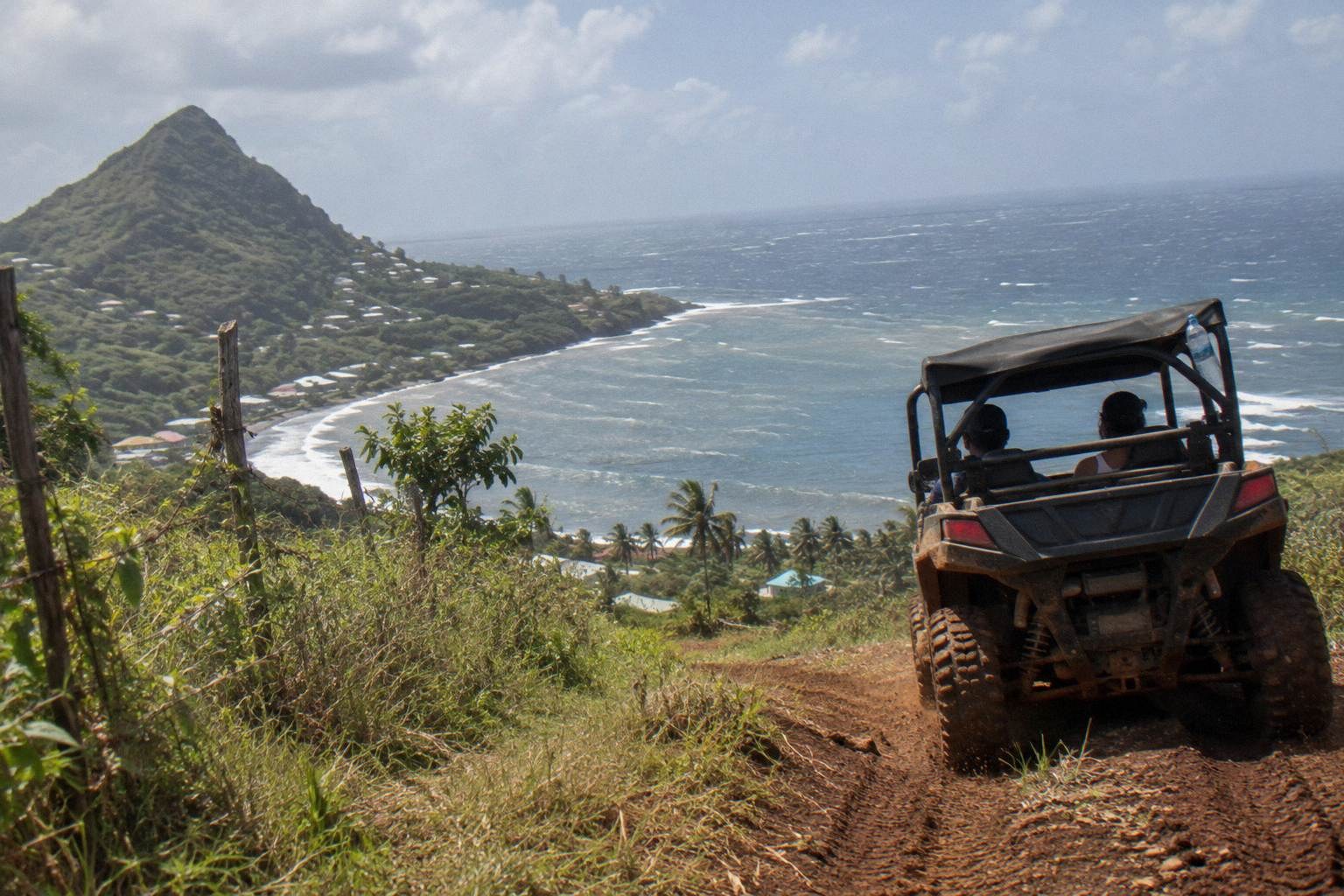
Can You Bring A GoPro On An ATV Ride In St Lucia?
What operators publish about cameras on St Lucia quad rides, which tours say riders may carry devices for photos, and the questions to ask before you film.
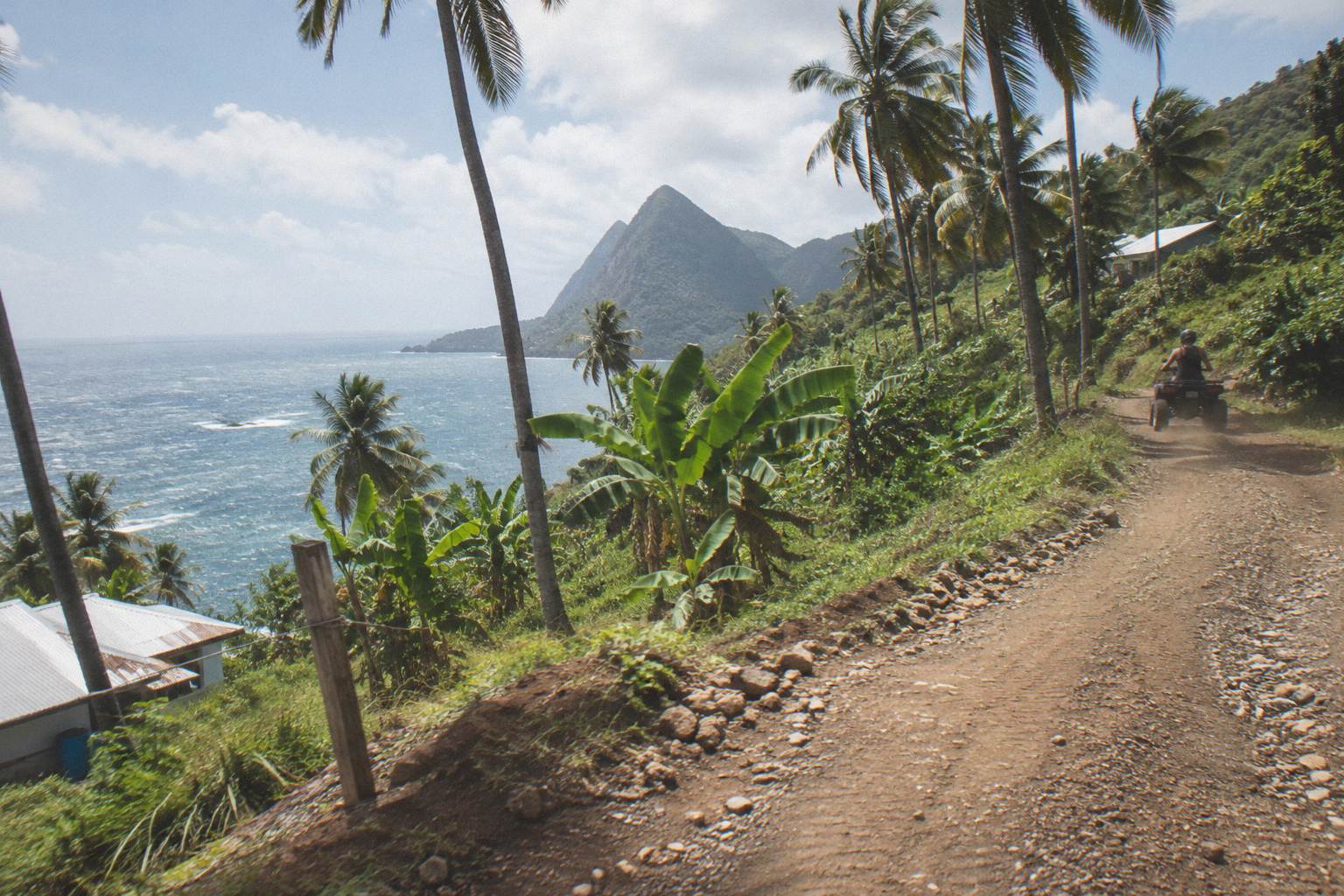
On the one tour whose operator publishes a camera policy, yes: Aanansi ATV Tours states on its own site that riders may carry devices for photos. For every other quad ride on the island the published pages are silent on cameras, so the plain answer is to ask the operator when you book. No source bans a GoPro, and none explicitly allows one outside that single Aanansi line.
That one sentence from Aanansi's own page matters more than it looks. It is the only direct statement about cameras anywhere in the published material for St Lucia quad rides, and it settles the question for that tour completely. For the rest, the silence is not a ban. It simply means the decision sits with the guide and the operator on the day, which is a different thing from a rule you can read in advance.
The practical gap between "allowed" and "silent" is small. A rider who books the Aanansi Marquis Estate ride knows before paying that a camera is welcome. A rider who books the Soufriere rainforest ride or the Anse La Raye waterfall ride knows the price, the duration and the cancellation terms, but not the camera policy, until the question is asked. The information here works through what is actually published, what bears on filming from the gear and conduct rules that do exist, and the short list of questions worth putting to the booking desk.
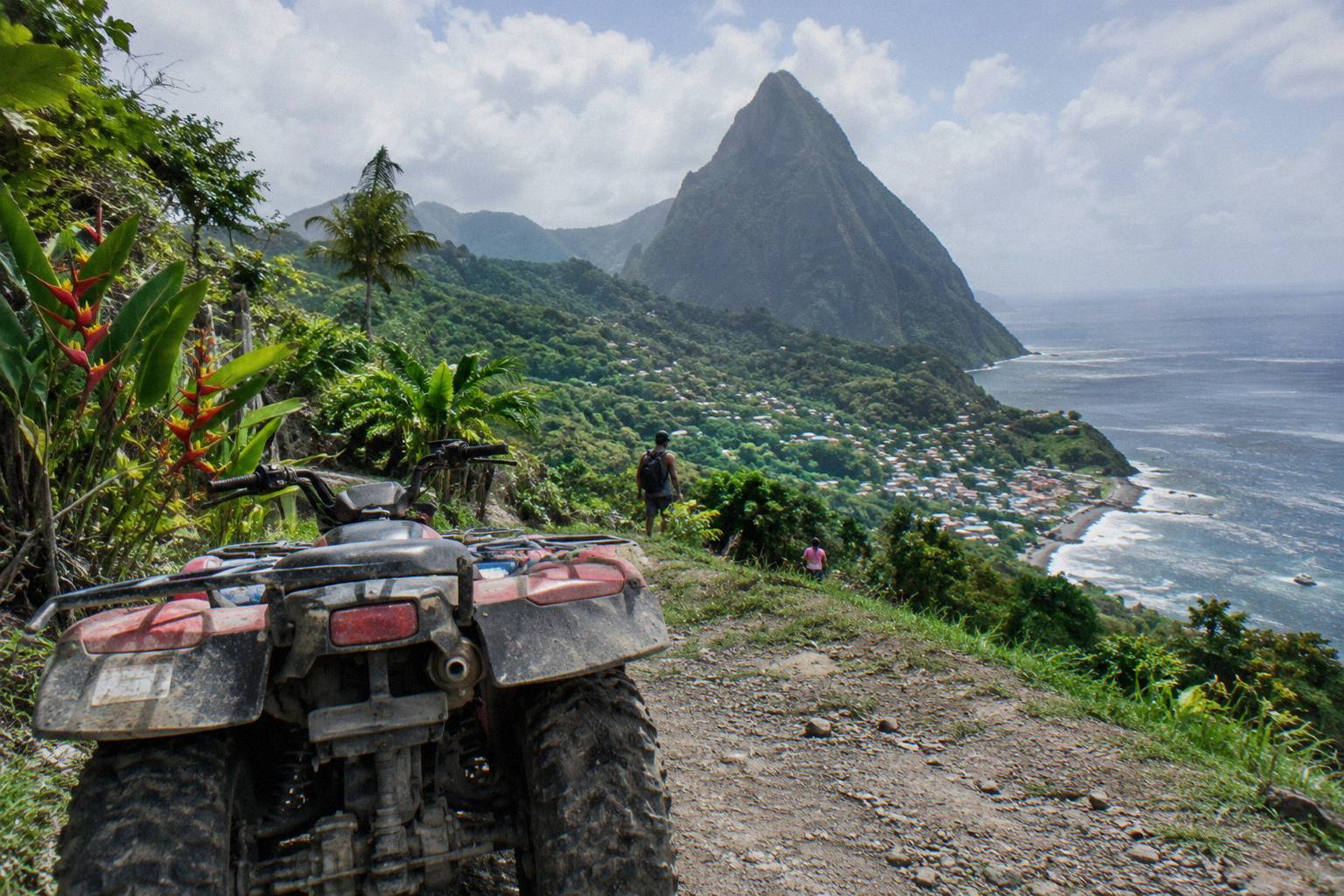
A quick framing note on scope. The research behind the rides covered here holds no statement on camera mounts, helmet-camera rules or what any guide films, so nothing here claims a chest harness is fine or a helmet mount is forbidden. What follows instead is the published record, the decision logic, and the checklist.
What The Operator Pages Actually Say About Cameras
Exactly one operator among the rides covered here addresses cameras directly: Aanansi ATV Tours, whose own site says riders may carry devices for photos. +Venture ATV publishes detailed conduct rules but no camera line, and MJ Wheelers, St Lucia Travel & Tours and Island Taxi & Tours publish none. Every camera question beyond Aanansi's needs one clause at booking time: ask the operator.
That is the whole published picture, and it is worth seeing laid out rather than scattered through paragraphs. The table below lists the three quad rides featured most often, what the operator's own material says about devices, and the specific question to ask.
| Tour | What the page says about devices | What to ask when booking |
|---|---|---|
| Aanansi ATV Tours, Marquis Estate | Operator's own site: riders may carry devices for photos | Whether you may film during the full ride or only at stops |
| +Venture ATV, Anse La Raye | Nothing published on cameras; helmets and protective gear provided and must be worn | Whether a camera may be carried on the ride and where it can be secured |
| MJ Wheelers, Soufriere | Nothing published on cameras; equipment and a local guide listed | Whether riders may carry devices, and what the guide films |
The Aanansi line deserves a little unpacking because it arrives in a specific context. The operator's page describes a welcome, a short safety briefing and riding instruction, then the note that riders may carry devices for photos, and a small group limited to 14. Read together, those lines sketch a ride where picture-taking is treated as a normal part of the experience rather than an exception to negotiate. The tour runs 2 to 3 hours from US$107.50 per person, rates 4.7 from 1,108 reviews, includes hotel pickup and drop-off from selected Castries or Gros Islet hotels and seaports, and carries free cancellation up to 24 hours before.
The +Venture situation is different in kind. Its rules page is the most detailed conduct text of any quad operator on the island, covering helmets and protective gear that must be worn, a safe speed through villages, a required waiver, no alcohol before or during the ride, and riders in good physical health. Cameras are simply not mentioned. That detail-rich silence cuts both ways: the operator clearly thinks carefully about what happens on the ride, and a question about carrying a device will reach someone who has thought about the answer, but the answer is still theirs to give.
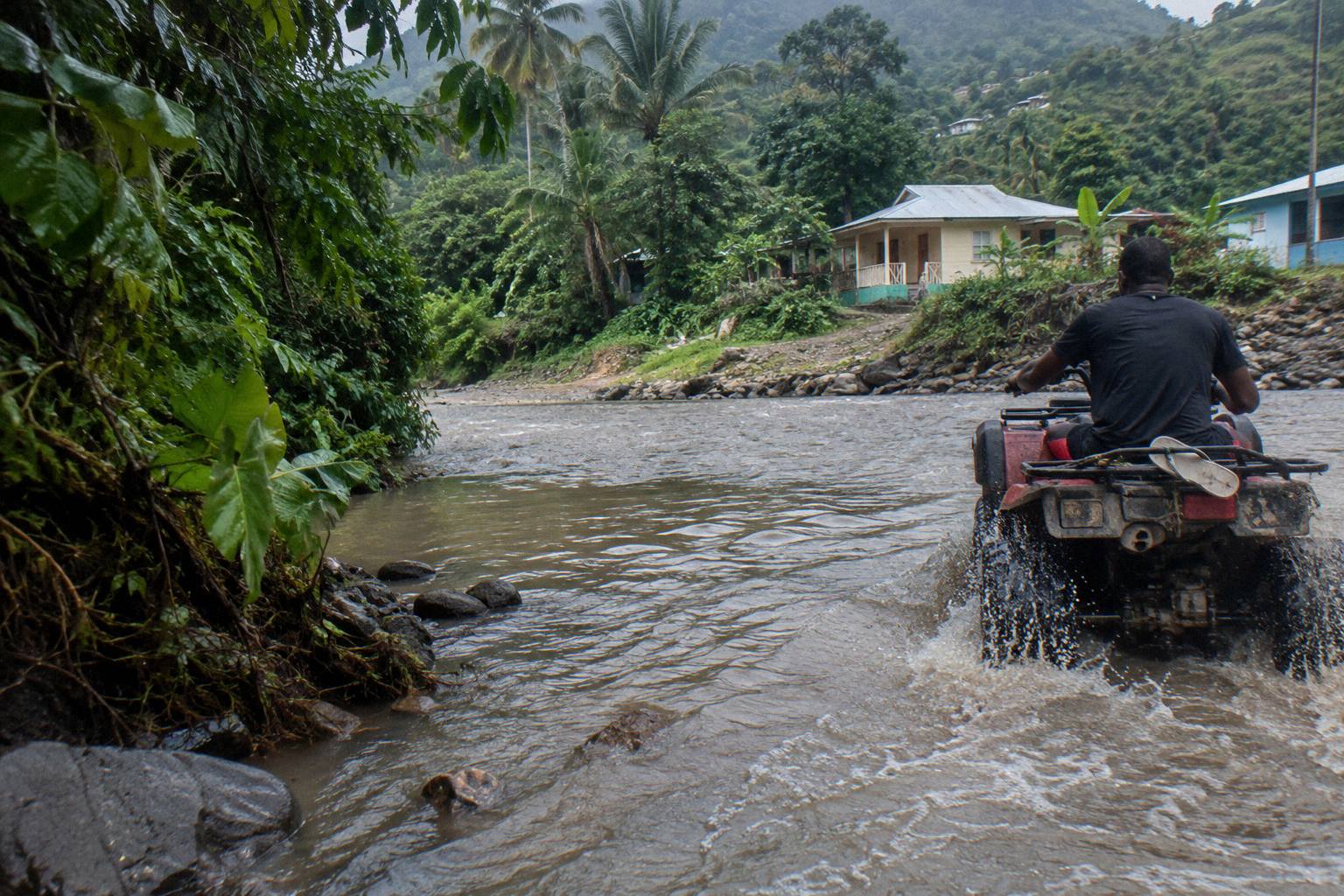
MJ Wheelers is the third case: a Soufriere operator whose own site lists ride options, single-seater and double-seater pricing and river crossings, with a local guide, equipment and bottled water on the booking page. The rainforest setting is the draw for a camera, with fruit sampling, exotic bird watching and an estate or farm named in the Bonding with Nature option, and river crossings that any filmmaker would want on tape. None of that is a camera permission, but it explains why the question is worth asking rather than assuming.
If the plan is to ride Soufriere's rainforest trails with a camera along, the MJ Wheelers ride is the natural starting point: the booking page lists a local guide, use of all necessary equipment and bottled water, and hotel pickup is available on request for select locations with a possible extra cost. Every one of the three rides above also carries free cancellation up to 24 hours before, which matters for a filmer: if the answer to the device question comes back unsatisfactory, a booking can still be unwound inside that window rather than lost.
How The Helmet And Gear Rules Shape Camera Mounting
+Venture ATV requires helmets and protective gear to be worn, and the Jeep And Zipline Adventure lists use of a helmet among its inclusions; every other tour publishes nothing about helmets. The Tourism Authority's gear guidance names sturdy sneakers or hiking sandals, light layers suitable for dust, mud and changing terrain, and sunscreen and hats for open-top vehicles, none of which addresses mounts. Where a helmet is worn, mounting decisions belong to the operator.
This is where most camera planning actually lives, because a GoPro on a quad ride is really two questions: may you carry it, and where may it sit. The second question has no published answer anywhere across these rides. No page mentions helmet mounts, chest harnesses, handlebar fixtures or suction rigs, and no policy will be invented here where none exists.
What the published rules do establish is the environment the camera will face. The Tourism Authority's Know Before You Go guidance for off-road tours calls for light layers suitable for dust, mud and changing terrain, which is a frank description of the conditions a lens meets on a trail. Any mounting plan, and any protective case decision, should be built around dust and mud rather than a clean road run. That guidance exists for clothing, but it transfers directly to equipment.
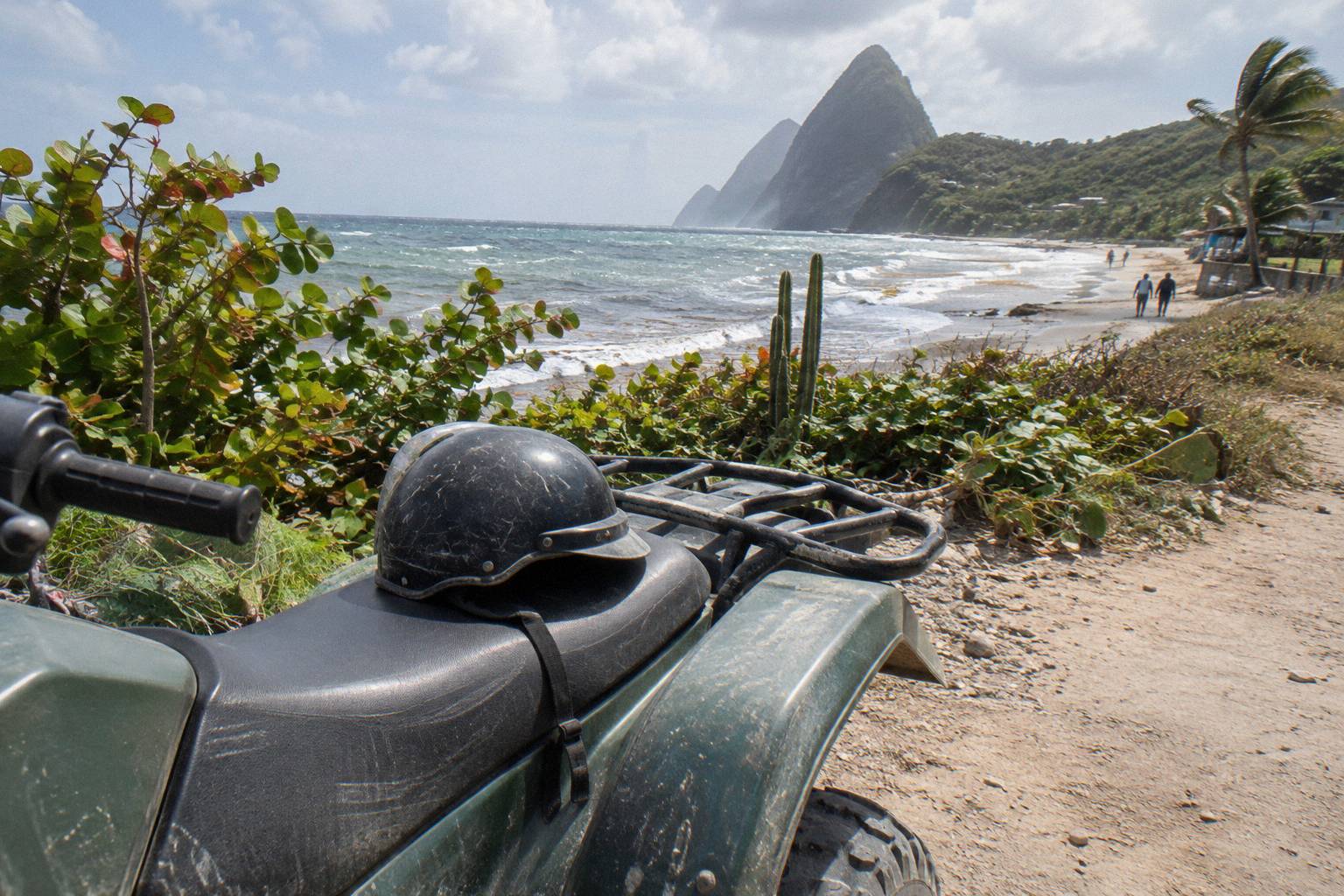
The helmet point is worth stating carefully because the evidence is uneven. Helmets appear as included items in exactly two places: +Venture, where they must be worn, and the Jeep And Zipline Adventure, a passenger ride where helmet use is listed for the zipline portion. For the Aanansi, MJ Wheelers, St Lucia Travel & Tours and Island Taxi rides, the booking data says nothing about helmets at all, so the only reliable line is to ask the operator. Where a helmet is worn, a head mount touches the operator's equipment, which is reason enough that the decision sits with them rather than with the rider.
The +Venture rules also carry an indirect lesson for filming. A required waiver, a safe speed through villages and no alcohol before or during the ride together describe a ride with rules enforced along the route, not just at the start. A camera plan that assumes a free-for-all will meet the same expectations any rider meets. The optional rum tasting at the end, where the operator offers it, is placed at the end precisely so it never overlaps the ride.
One more boundary from the same official source, because it belongs with conduct rather than cameras: the Tourism Authority notes off-road riding is not recommended for pregnant travellers or those with back conditions, and that drivers must be 21 or over with a valid licence. Each operator sets its own age and licence rule, so confirm it before booking. None of that touches a camera directly, but a rider who understands the conduct frame usually finds the camera conversation easier, because it lands as one question inside an established set of rules rather than a surprise.
Which Rides Give A Camera The Most To Work With
On the published descriptions, the Anse La Raye ride offers the widest subject range for a lens, with a waterfall entrance fee, a farm tour and a distillery tour all included; the Soufriere rainforest ride adds river crossings and bird watching; and the Marquis Estate ride names sugar mill ruins and Atlantic views. All three run 2 to 3 hours with free cancellation up to 24 hours before.
Subject matter is the part of camera planning that needs no permission. The routes themselves are published, and a rider choosing between them on filming grounds is choosing between three genuinely different palettes.
The +Venture ride from the Anse La Raye area, from US$135 per person and rated 4.9 from 448 reviews, packs a waterfall, a farm and a distillery into one 2 to 3 hour run. For a camera that means water, agriculture and interiors in a single edit, plus the fishing village context of Anse La Raye itself, a waterfront community known for its fish fry. The waterfall entrance fee is included, so a swim-and-film stop is not an extra cost decision.
The MJ Wheelers ride from Soufriere, from US$130 per person and rated 5.0 from 82 reviews, is the rainforest option. The operator's own options include Nature Ride, Bonding with Nature with fruit sampling and exotic bird watching, and beach rides including a 3 Hour Beach and BBQ Ride, with river crossings named on the site. Rainforest light and river crossings are the two ingredients most action cameras are bought for, and this is the only ride listed that names both.
Aanansi at Marquis Estate, the operator that permits devices outright, rides a sugar estate on the Atlantic coast near Cape Marquis, with sugar mill ruins and Atlantic views on the operator's page. From US$107.50 per person and rated 4.7 from 1,108 reviews, it is also the largest review pool among these rides and the lowest from-price among the rated quad rides, which makes it a natural first choice for a rider whose camera plan needs certainty in advance.
After the paragraphs above, the comparison holds up as a decision table too.
| Ride | From price | Rating | Camera subjects on the published route |
|---|---|---|---|
| +Venture ATV, Anse La Raye | US$135 per person | 4.9 from 448 reviews | Waterfall, farm, distillery, village waterfront |
| MJ Wheelers, Soufriere | US$130 per person | 5.0 from 82 reviews | Rainforest, river crossings, bird watching, beach |
| Aanansi ATV, Marquis Estate | US$107.50 per person | 4.7 from 1,108 reviews | Sugar mill ruins, Atlantic views, estate trails |
Riders comparing the feel of these machines can go wider with the site's ATV, UTV and buggy comparison, and the question of which ATV ride suits a first-timer is covered separately for riders still choosing.
What To Ask The Booking Desk Before You Film
Four questions cover the whole gap: whether riders may carry devices at all, whether cameras may be used during the ride or only at stops, where a camera may be mounted or stowed, and what the guide films or photographs and how those files are shared. None of the answers is published for any tour except Aanansi's device line, so the questions, not assumptions, are the plan.
Bundling them into one short message at booking is faster and more reliable than raising a camera at the trailhead, when the group is mounting up and the guide is mid-briefing. Operators such as Aanansi ask for booking two days in advance, which is exactly the window these questions fit into.
The fourth question is the one riders forget. Several operators run guided small groups, and on guided rides the guide's own camera is often the better instrument, positioned ahead of the group at the interesting moments. Whether those photos or clips are shared, sold or simply shown at the end is an operator practice, not a published policy anywhere here, so it belongs on the same list.
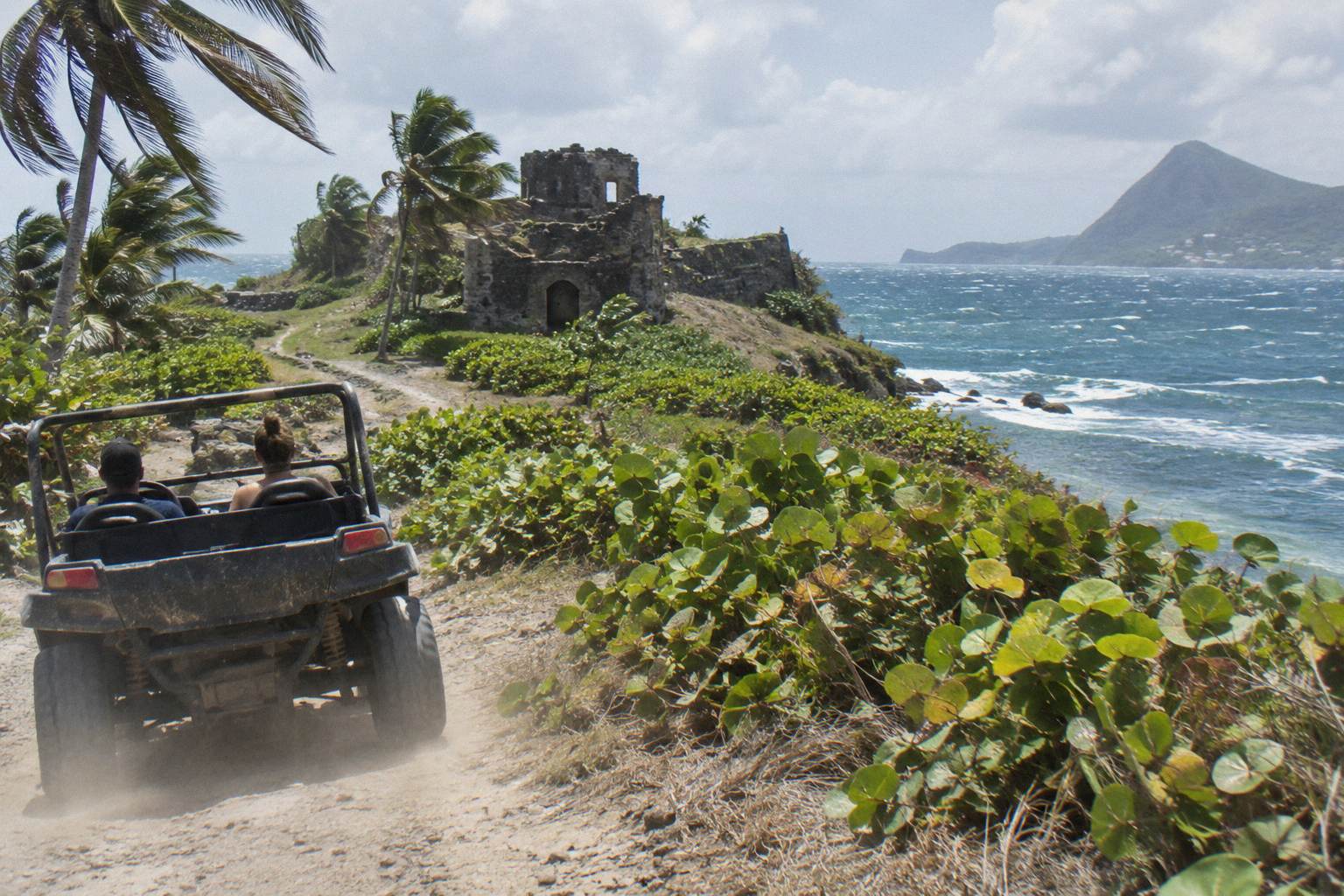
A related practical point: batteries and storage. Nothing published restricts them, but a 2 to 3 hour ride in heat, with dust, drains a camera faster than a sightseeing walk. Carrying a spare and a sealed case is standard practice and conflicts with nothing any operator states. The same logic covers a lanyard or wrist strap for hand-held shots at stops, which is the use Aanansi's device line most directly supports.
Deciding By Traveller Type
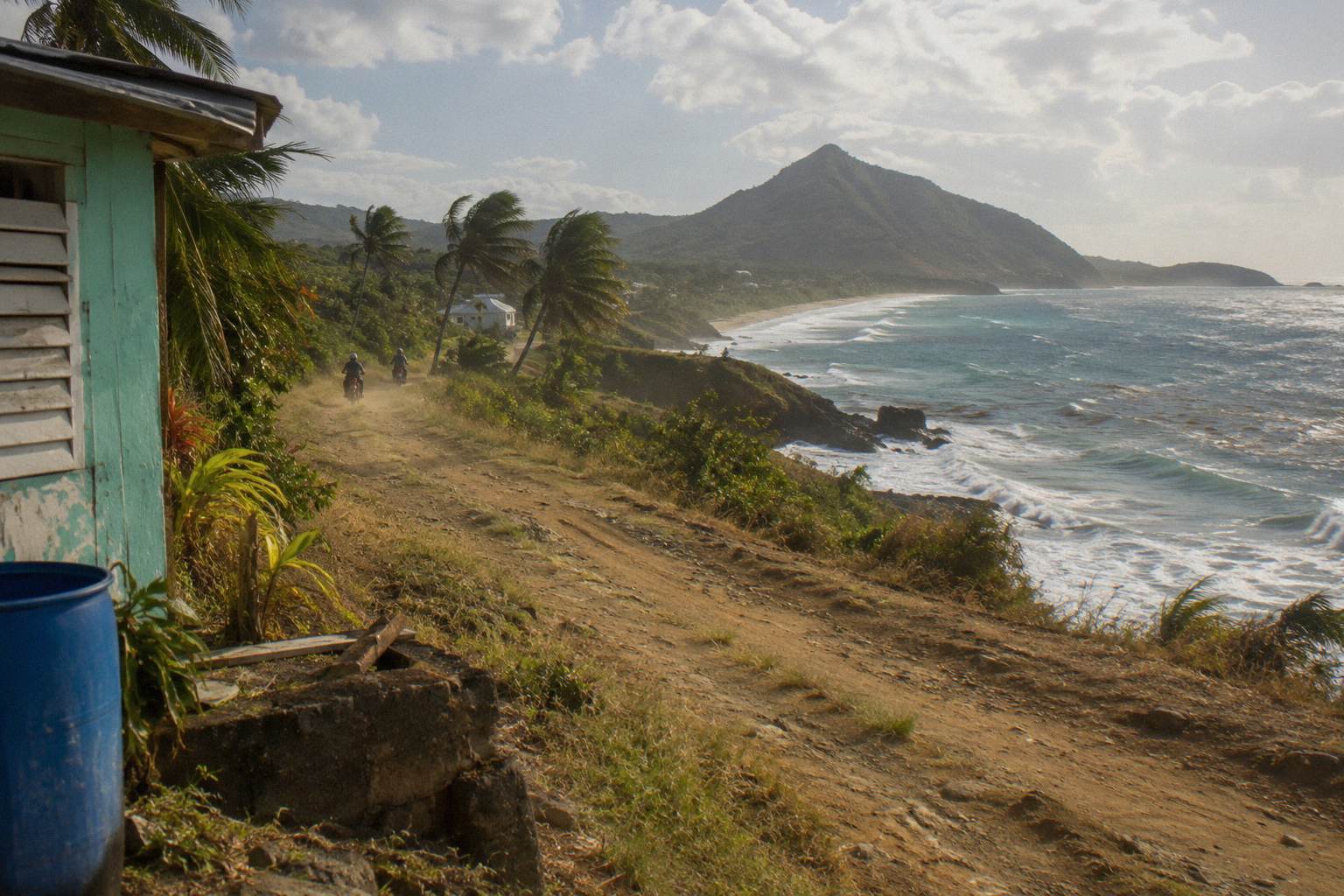
A cruiser on a tight port window should weight the answer's certainty most heavily, which favours Aanansi, the one operator with a published device line and hotel and seaport pickup; a photographer prioritising footage should pick the route first and ask permission second; a nervous first-timer should let the guide's camera carry the memory and keep hands free.
The cruiser case is the sharpest because it is time-bound. Port Castries has two cruise complexes, Pointe Seraphine and La Place Carenage, and Aanansi's pickup points include selected Castries and Gros Islet hotels and seaports, normally less than a 20 minute drive from most locations. A rider with hours to spare before all-aboard cannot afford to discover a camera problem at the trailhead, so the tour that answers the question in advance is the tour that removes the risk. The site's guide to shore excursion timing from Castries works through the wider port math.
The photographer's case inverts the priorities. Footage of river crossings in rainforest light exists on exactly one route listed here, and no amount of pre-booking certainty on another route substitutes for it. For that rider, the correct sequence is to book the Soufriere or Anse La Raye ride, ask the device question in the booking message, and carry a fallback plan, meaning a pocketable camera for stops, that survives a no.
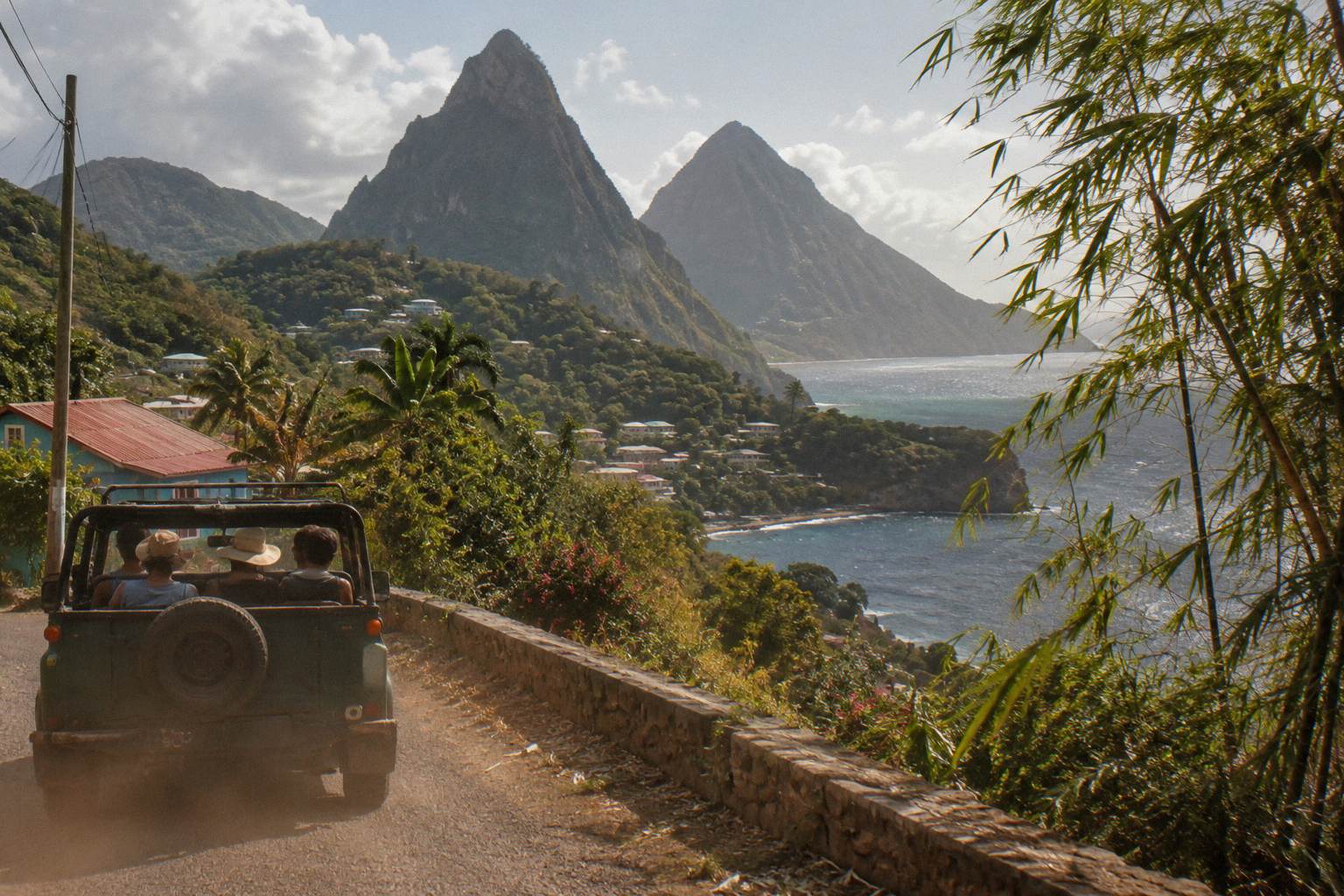
The first-timer's case is the quietest and the most underrated. A rider still thinking about throttle and balance does not need a camera in one hand on the first river crossing. The guide-led structure of every ride here means the scenery gets captured either way, and the rider's attention stays where the safety briefing put it. The site's piece on what not to do on an ATV tour collects the failure modes, and split attention is high among them.
Then there is the group case. Aanansi offers customised group packages for its small groups of up to 14, which is the natural setting for one designated filmer per party, and MJ Wheelers prices double-seater rides, so a passenger can hold the camera while a companion drives. That passenger option is the only published way to film hands-free without any mount question at all, though an age limit may apply for children riding as passengers on the +Venture ride.
The Bottom Line On Cameras And Quads In St Lucia
Treat Aanansi as the yes, the rest as ask-first, and nothing as a ban. The published record contains exactly one device policy, several detailed conduct rules that a camera must live inside, and routes that vary more than the camera policies do. A rider who asks one short question at booking has done everything the evidence supports.
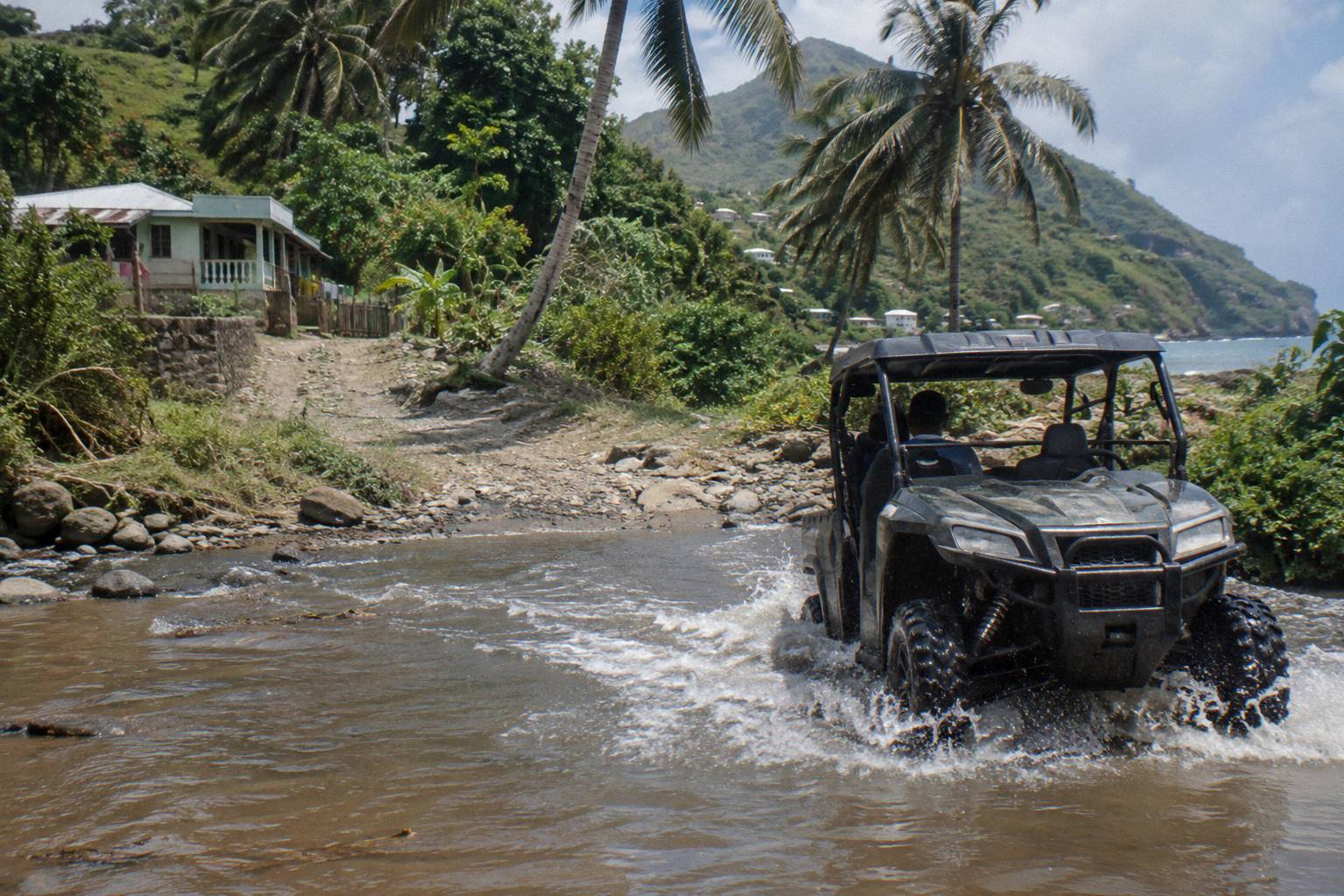
That is a smaller caveat than it reads. St Lucia's quad operators run small, guided rides with clear rules and, in three cases, review pools in the hundreds or above. Camera questions in that setting are routine, and the Aanansi line shows at least one operator has already answered it in public. For more on planning the ride itself, the St Lucia ATV Tour homepage collects the full set of rides, and the wider guides cover everything from gear to pickup logistics.
Whichever ride carries the camera, two habits travel well: seal the device against dust and mud, exactly the conditions the Tourism Authority's clothing guidance anticipates, and keep hands on the bars until the guide calls a stop. The footage worth keeping is filmed on a ride that ended the way it began.
Common Questions About Cameras On ATV Rides
Can You Bring A GoPro On An ATV Ride In St Lucia?
On the Aanansi Marquis Estate ride, yes: the operator's own site says riders may carry devices for photos. On every other quad ride the published pages are silent, so ask the operator when you book. No source bans a camera.
Do Any St Lucia ATV Operators Provide Helmets?
Yes, two tours include them: +Venture ATV provides helmets and protective gear that must be worn, and the Jeep And Zipline Adventure lists use of a helmet. For other tours the booking data says nothing about helmets, so ask the operator.
Can A Camera Be Mounted On A Helmet Or The Quad?
No operator publishes a mount policy of any kind. Where helmets are worn, mounting touches the operator's equipment, so the decision is theirs: ask when booking.
Can A Passenger Hold The Camera Instead?
On published options, yes in places: +Venture says children may ride as passengers with an age limit possibly applying, and MJ Wheelers prices single-seater and double-seater rides. Other tours say nothing on passengers.
Do Guides Take Photos Or Video You Can Buy?
Nothing published states a guide-photo policy, pricing or sharing practice. Ask the booking desk what the guide films and how files are shared.